
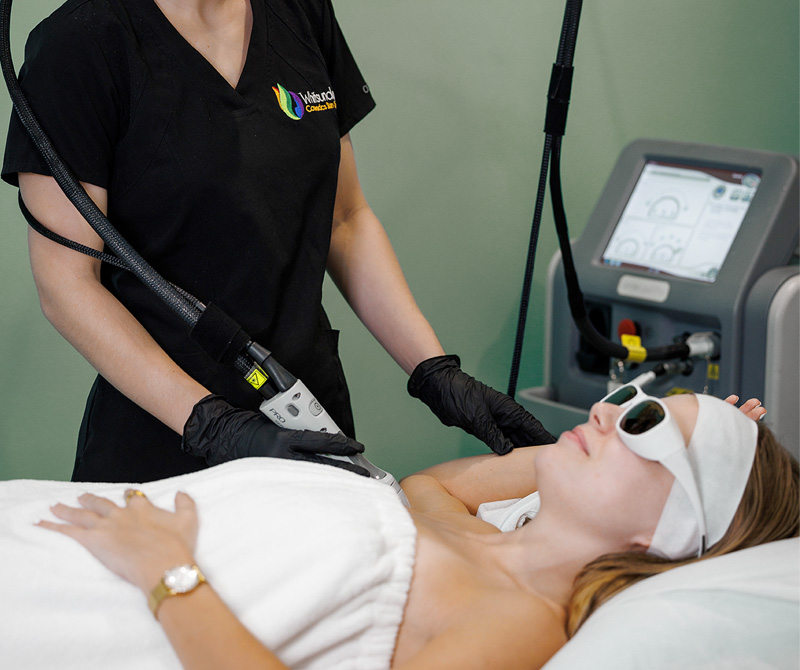
Doctor-led laser hair removal for life outdoors in the Whitsundays
Laser hair removal treatments are available for a range of areas, with treatment planning guided by your skin type, hair type, treatment area, sun exposure history and suitability for laser.

Sensitive treatment for delicate areas.

Small area, short appointment – an ideal place to start.

Full or partial leg laser treatments available.

A popular choice for local men.

May be used for upper lips, chin and other areas.

Staged treatment at carefully timed intervals.
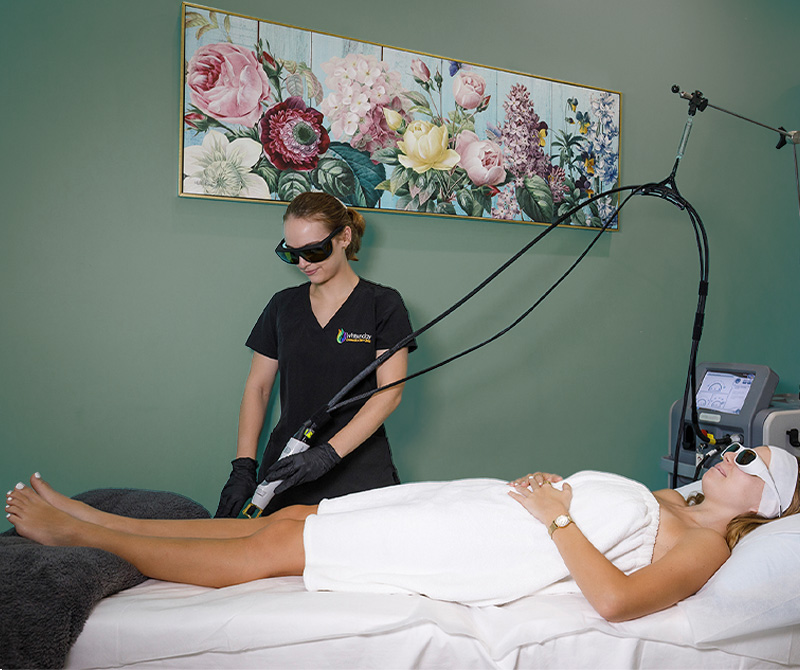
Hair grows in cycles, and the laser targets follicles during their active growth phase, which is why laser hair removal works best as a course of treatments rather than a single session.
At your initial laser hair removal consultation, your treating practitioner will:
Before your treatment, avoid sun exposure to the treatment area for at least two weeks. If you’ve had recent sun exposure or sunburn, your appointment will need to be rescheduled — this is a clinical requirement, not just a precaution.
After your treatment, sun protection is essential. Apply sunscreen every morning and reapply throughout the day (you’ll need it with you at all times).

All treatment plans are overseen by experienced doctors.

Suitability assessed before proceeding.

Full or partial leg laser treatments available. All practitioners performing laser hair removal treatments are fully laser licensed and trained.

A true laser platform with a highly targeted wavelength.

May be used for upper lips, chin and other areas. Based in Whitsunday Plaza, Cannonvale, with ample parking and easy access

We understand life here – in and out of the water, enjoying the pool and the beach.
Alexandrite laser and intense pulsed light (IPL) both use light energy to target pigment in the hair follicle but there are some key differences.
Highly targeted: uses a dedicated 755 nm wavelength
More diffuse: wavelength can vary from 590–1,200 nm.
Long-term hair reduction: 27-53%*
*According to a 2022 systematic review of 5 randomised controlled trials involving 233 patients.